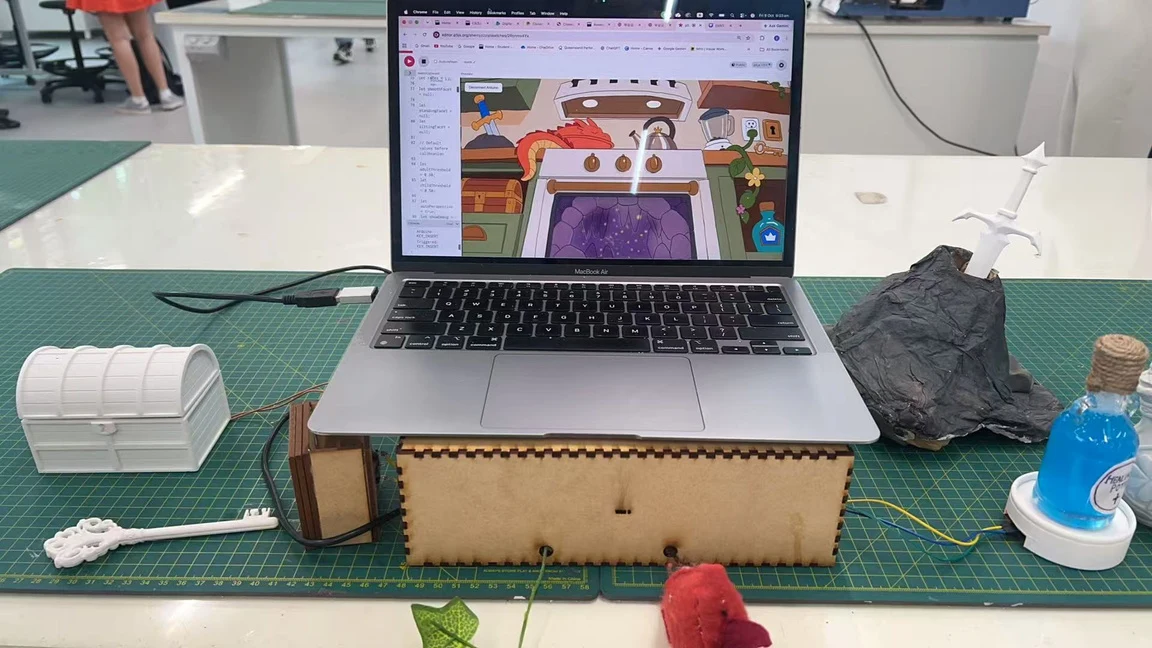
The assembled prototype, with physical props connected to on-screen responses.
THE IDEA
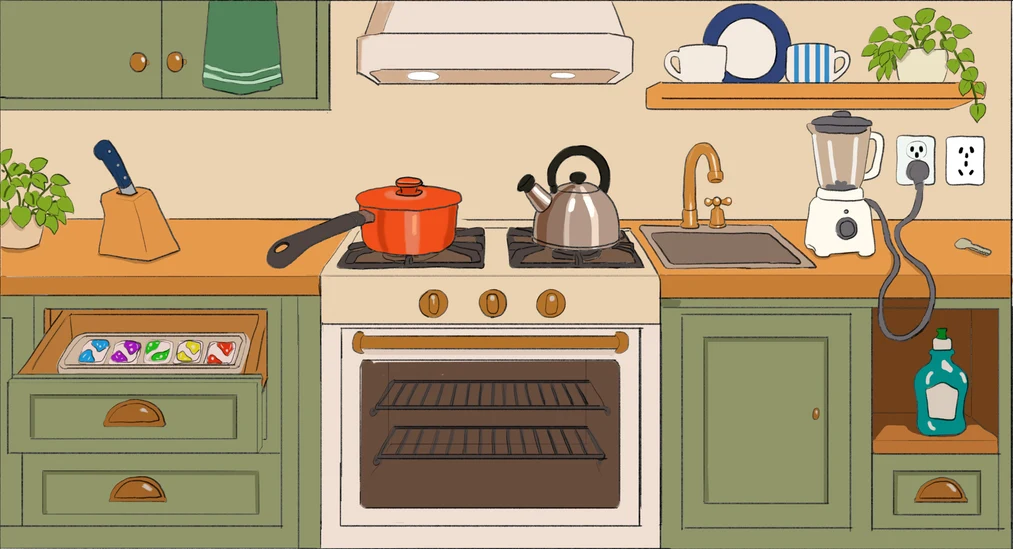
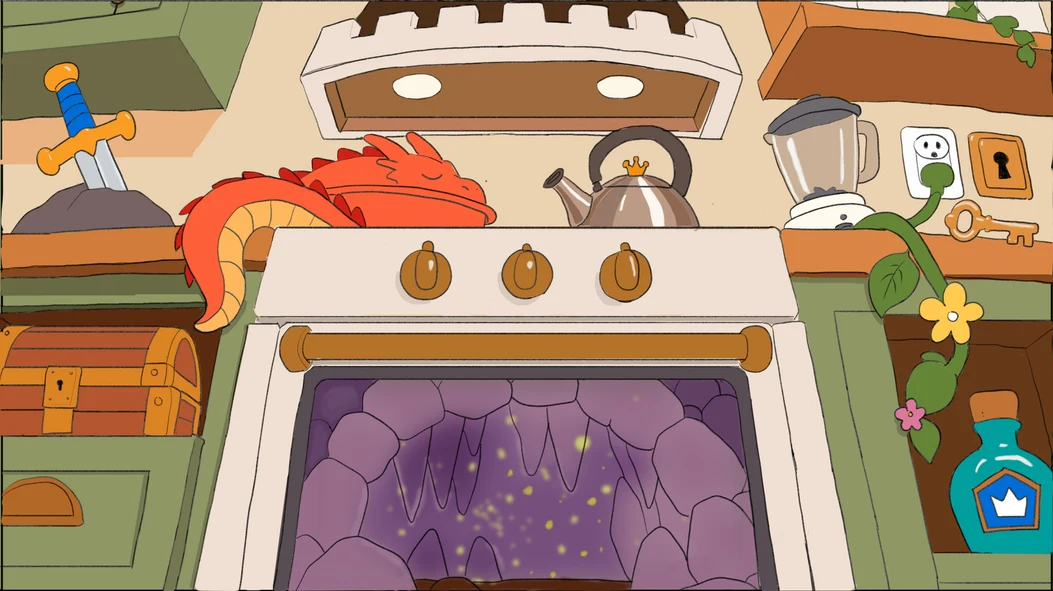
A familiar room. A different point of view.
REACH invites adults to explore an illustrated kitchen through a change in viewing height. Standing shows the adult viewpoint; sitting reveals a lower, imaginative view, where ordinary kitchen objects become fantasy props.
Pulling, lifting and opening physical objects triggers on-screen responses. The experience was designed to encourage adults to reconsider what a child might see and reach.
Adult viewpointChild viewpoint — a creative interpretation
DESIGN DECISION 01
From tapping to touching.
I initially considered a touchscreen. Physical objects offered a more direct way to explore pulling, lifting and opening, while touchscreen availability and cost also influenced the decision. I developed a setup where props provide the input and the screen reveals a response.
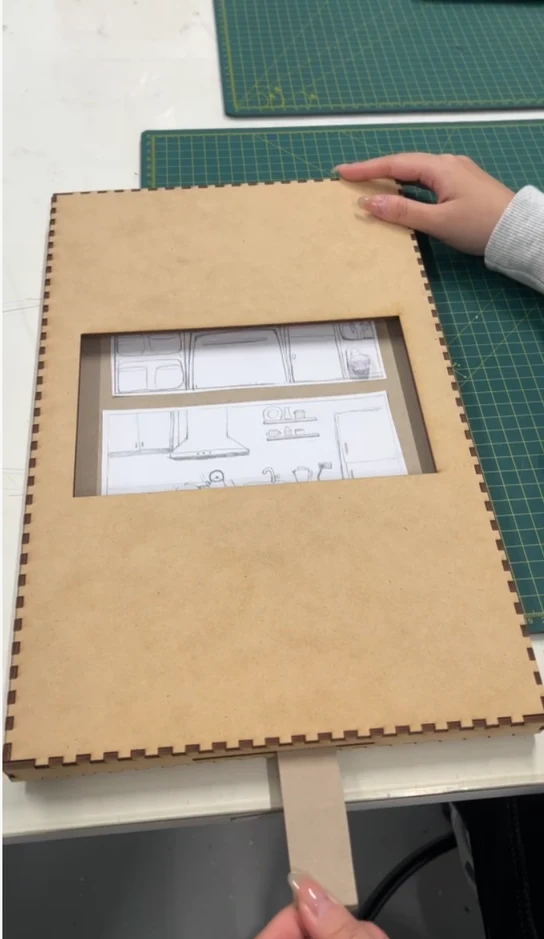
Early paper prototype used in peer testing.
LEARNING FROM A PROTOTYPE
Playful doesn’t always mean discoverable.
In peer testing, participants could use the pull-tab to switch scenes, but some did not realise that the fantasy objects could be lifted. This highlighted the need for clearer cues for interaction.
The paper model also had limits: it could not reproduce standing and sitting, or test the connection between physical props and digital responses.
DESIGN DECISION 02
Make movement meaningful.
A camera-based prototype tracked vertical face position to switch viewpoints. I introduced a neutral range between thresholds to reduce unwanted switching, and refined the thresholds with people of different heights.
The result remained sensitive to camera angle and participant position. A consistent setup was important for reliable switching.
What the prototype established
The prototype brought together viewpoint switching, sensor-connected props and visual feedback. The documented version still had an inconsistent sword interaction and an unfinished visual response for it. Further testing was needed to assess repeated use and whether participants understood the intended hazards.
AI supported brainstorming, coding, troubleshooting and wording. AI-generated images informed visual exploration; I reviewed and adapted outputs, made design decisions, and carried out physical fabrication, assembly and testing.